

Sex Work Became a Suburban Issue in NZ
Sex work has occupied an unusual place in New Zealand life since the Prostitution Reform Act 2003 decriminalised adult prostitution.
The law changed the industry's legal status, but it did not resolve the debate over where brothels should operate.
One of the clearest examples emerged in Auckland, where a brothel operating from Brown Street in Ponsonby became the focus of complaints from neighbours and nearby businesses. The dispute was not simply about sex work. Parking, traffic, neighbourhood character, schools and the limits of council planning rules all became part of the argument.
More than a decade later, that story still helps explain an important question: what happens when a legal adult business operates alongside ordinary suburban life?

How New Zealand Changed Its Approach to Sex Work
The Prostitution Reform Act 2003 fundamentally changed New Zealand's approach to prostitution.
Rather than treating consensual adult sex work as a criminal activity, the legislation created a framework focused on worker rights, health and safety, consent and protection from exploitation.
It also recognised that sex work does not happen in one type of venue.
New Zealand has larger commercial brothels, independent workers, street-based sex work and what the legislation calls small owner-operated brothels, commonly shortened to SOOBs.
A small owner-operated brothel can have no more than four sex workers, with each person retaining control over their own earnings.
This distinction matters because a discreet independent operation can look very different from a large commercial venue.
For a broader explanation of the legal environment, EscortLocate's guide to New Zealand's sex work landscape covers decriminalisation, worker rights and the wider industry.
The Ponsonby Brothel Dispute
Brown Street in Ponsonby represented exactly the type of mixed urban environment where tensions can develop.
Apartments, traditional Auckland villas, cafés, offices and educational facilities were all located nearby. According to contemporary reporting, Firecats Escorts operated from an upstairs apartment in the street.
Residents and nearby businesses noticed regular arrivals and departures throughout the day.
Parking became one of the biggest complaints.
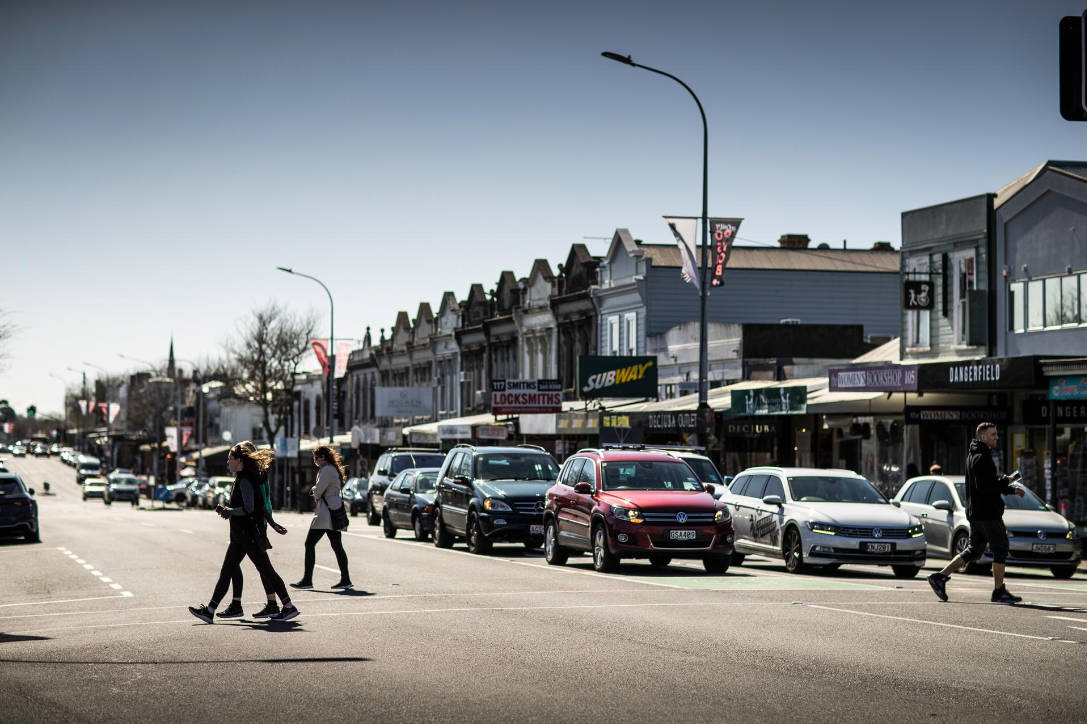
For neighbours, the concern was therefore not simply that a brothel existed. It was an increasingly busy business operating in an area where residents, customers, workers and parents were already competing for limited street space.
Auckland Council eventually became involved in planning requirements. The resulting dispute illustrated a problem that remains central to brothel regulation: decriminalising sex work does not automatically mean every property can be used for every type of sex-work business.
Those researching today's market can see how widely Auckland's industry is distributed by browsing current Auckland escort listings, which cover the CBD and suburbs across the wider region.
Can Brothels Operate in Residential Areas?
The answer is more complicated than a simple yes or no.
New Zealand law allows territorial authorities to regulate the location of brothels, while local planning and resource-consent requirements can affect how a particular property may be used.
Large commercial establishments and small owner-operated businesses can therefore face very different requirements.
That distinction has historically caused difficulties for councils.
A quiet home-based operation may attract almost no attention. An operation generating frequent traffic, noise, parking pressure or other effects can quickly become a neighbourhood issue.
The challenge for councils is balancing legitimate concerns about land use and public nuisance against Parliament's decision to decriminalise adult sex work.
Earlier attempts by councils to impose broad restrictions on brothel locations also faced legal challenges, demonstrating that local regulation cannot simply recreate prohibition through planning rules.
Auckland Was Not the Only City Debating the Issue
Similar arguments emerged around the country after the reform.
Christchurch experienced particularly visible controversy around street-based sex work, while Hamilton debated where commercial sex businesses could operate. Wellington and other urban centres developed their own patterns of agencies, independent workers and adult businesses.
The industry today remains highly localised.
EscortLocate's directories for Christchurch, Hamilton, and Wellington escorts illustrate how adult services are spread across multiple New Zealand cities rather than concentrated in a single traditional red-light district.
Search behaviour reflects the same pattern. People may still use older colloquial searches such as “NZ working girls”, “working girls in Auckland” or “Auckland hookers”, but legislation, health organisations and most contemporary industry discussions generally use the term sex worker.
Why Small Brothels Create a Regulatory Puzzle
Small owner-operated brothels were intended to give independent sex workers an alternative to large establishments or street-based work.
There is a safety argument behind that flexibility.
Forcing every independent worker into isolated commercial or industrial areas could make working conditions less secure, particularly late at night.
At the same time, residents reasonably expect home businesses not to create excessive traffic, noise or disruption.
That is why the real debate is often less dramatic than headlines suggest.
It is not necessarily sex work versus suburbia.
It is about finding workable rules for privacy, safety, neighbourhood amenity and legitimate business activity.
For readers interested specifically in Auckland, the guide to adult service locations provides more local context.
Beyond the Old “Red-Light District” Idea
New Zealand's experience shows that decriminalisation did not make the sex industry disappear from public debate. Instead, it changed the questions being asked.
The issue moved from whether adult sex work should exist legally to how legal businesses should coexist with neighbours, councils and other land users.
The Brown Street controversy captured that transition particularly well.
A brothel could be lawful as a business while still subject to planning restrictions at a particular location. Residents could raise genuine concerns about parking or disturbance without necessarily arguing for the recriminalisation of sex work.
That distinction remains important.
As New Zealand's adult industry becomes increasingly independent and internet-based, its physical footprint may be less obvious than it once was. But the balance between worker safety, privacy, community expectations and sensible local regulation remains just as relevant.
Questions People Still Ask
Are brothels legal in New Zealand?
Adult consensual sex work is decriminalised under the Prostitution Reform Act 2003. However, brothels and their operators can still be subject to national legislation, local planning controls, bylaws and other legal requirements.
What is a small owner-operated brothel in New Zealand?
Under the Act, it is a brothel where no more than four sex workers work, and each worker retains control over their individual earnings.
Can someone run a brothel from a residential property?
Possibly, but the answer depends on the type and scale of the operation as well as applicable council planning rules and bylaws. Decriminalisation does not override every land-use requirement.
Why do suburban brothels sometimes cause complaints?
Historically, complaints have often concerned traffic, parking, noise, signage or the intensity of business activity rather than the legality of adult sex work itself.
Did the Prostitution Reform Act remove council control over brothels?
No. Territorial authorities retain powers relating to brothel locations, and resource-consent requirements may also apply.