

Introduction
Labels make complicated lives look simple.
“Trans.” “Sex worker.” “Māori.” “Parent.” “Activist.”
Stevie’s story shows why none of those words, on their own, tell us very much about the person living behind them.
Originally recorded by oral historian Caren Wilton and published as part of My Body, My Business, Stevie’s account moves through poverty, unstable housing, queer politics, parenthood, sex work and gender transition. Rather than presenting sex work as either liberation or tragedy, the story shows something considerably more recognisable: a person finding practical ways to survive while gradually working out who they are.
A Childhood Built Around Movement and Making Do
Stevie was born in a housebus in the early 1980s.
With Ngāpuhi whakapapa on one side of the family and Ngāti Maniapoto on the other, Stevie spent her early childhood moving around before the family settled on the West Coast of the South Island. Life in the Southern Alps could feel isolated, and money was often scarce.
Stevie’s parents designed and made leather clothing and footwear rather than holding conventional jobs. There were plenty of siblings but little connection with extended whānau, and financial pressure was a constant background presence.
Education was unconventional, too. Stevie studied through correspondence school until around 12, briefly attended secondary school and soon began questioning why attendance mattered when catching up academically came easily.
What stands out from this period is an early resistance to other people deciding what a life was supposed to look like. Sexuality did not create the same internal conflict it did for many young queer people. Stevie recalls recognising attraction to girls very early and later describing themself as sexually fluid.
When Survival Comes Before a Career Plan
Teenage life became considerably harder.
After leaving school, Stevie entered a relationship with a much older man and experienced periods of extreme financial insecurity and poor housing. At one point, getting basic assistance was complicated by the lack of a stable address. Looking presentable enough to find conventional work was difficult when even housing, clothing and food were uncertain.
A visit to Christchurch during those years offered an early glimpse of the adult industry. Stevie remembers seeing a massage parlour that felt almost like another universe compared with everyday life outside.
That experience was not yet the beginning of Stevie’s sex-work career. But it introduced a world that would later become important.
Christchurch’s adult industry has changed considerably since newspaper advertisements and neon-fronted premises dominated discovery. Today, people are much more likely to encounter providers through online resources such as Christchurch escort listings rather than the advertising environment Stevie first encountered.
Politics, Feminism and Finding Community
Another major turn came through community rather than employment.
After moving to Whanganui, Stevie spent time around an anarchist community and discovered a political philosophy very different from the caricature of anarchism previously encountered.
Ideas such as collective responsibility, active listening and questioning unequal power structures struck a chord. Later, feminist writing helped give names to patterns Stevie had already noticed: women doing disproportionate work, men dominating conversations and inequality being treated as ordinary.
Stevie eventually became involved in feminist, queer and prisoner-support activism, as well as work supporting survivors of sexual violence. Wellington was part of this wider political and community journey.
For readers looking at how the adult industry operates in the capital today, EscortLocate’s Wellington escort directory provides a very different picture from the largely offline environment of earlier decades.
Why Sex Work Eventually Made Practical Sense
Stevie entered sex work later, after becoming a parent.
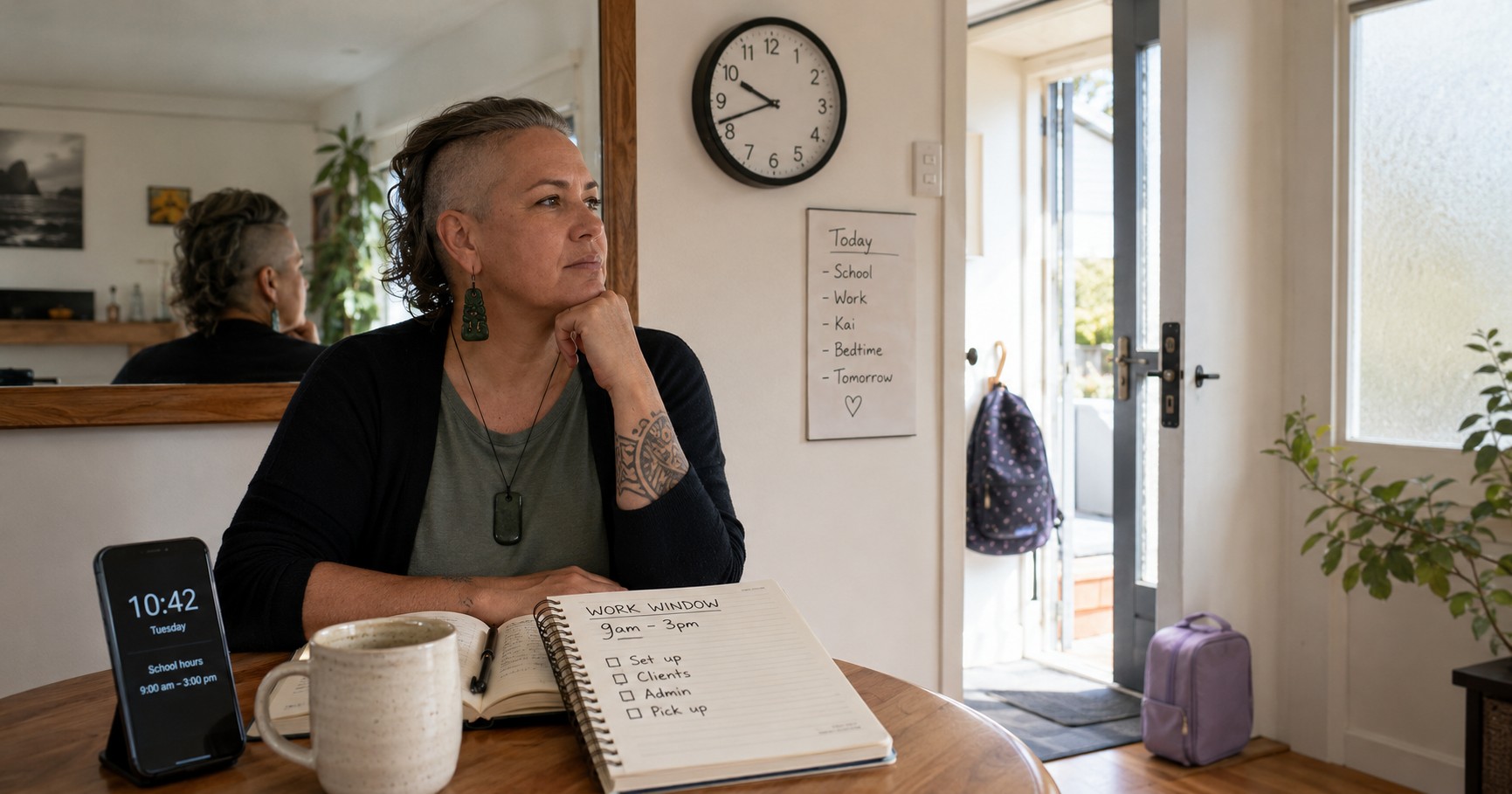
Once Stevie’s son started school, the problem was straightforward: work had to fit between school hours. Jobs offering roughly 9 am to 3pm flexibility were not exactly plentiful.
Sex work offered something conventional employment could not easily provide — control over working hours and the possibility of earning enough without giving up parenting responsibilities.
Stevie initially chose an expensive establishment after researching the market. But the first experiences quickly demonstrated that income was only one part of the equation.
Clients could challenge boundaries, ask invasive questions or pressure workers around safer-sex practices. Stevie soon realised that the environment did not suit them and moved through several different work models, including independent escorting and massage-based venues.
The lesson was not simply that one form of sex work was “better”. It was clear that defined boundaries mattered.
That principle is also reflected in New Zealand law today. The Prostitution Reform Act gives sex workers the right to refuse commercial sexual services. At the same time, Community Law emphasises that consent can be refused or withdrawn regardless of payment or contractual arrangements.
The Mirror That Changed How Stevie Saw Themselves
One of the most important moments in Stevie’s story happened at work.
While working at an upmarket fantasy venue, Stevie was sitting alone in front of a large mirror, dressed in an intensely feminine way that clients expected.
The reflection felt wrong.
Not unattractive. Not unsuccessful. Disconnected from the person looking at it.
That moment became a catalyst for months of thinking and conversations about gender. Stevie already knew trans people, including trans women and a trans man, so transition was not an abstract concept. What remained difficult was finding a version of trans identity that actually fitted.
Being Trans Without Following Somebody Else’s Template
Stevie did not want to exchange one rigid gender role for another.
In the original oral history, Stevie describes themself as a “non-binary takatāpui transsexual” and explains that femininity remained important despite a transmasculine identity.
That distinction matters.
Māori has reclaimed Takatāpui as an identity that can encompass sexuality, gender, culture and whakapapa rather than separating each into neat Western categories. Te Ara notes that the term is used by Māori people across gay, lesbian, bisexual, transgender and intersex communities and is significant because cultural identity remains part of its meaning.
Stevie’s account also highlights the difficulty gender-diverse people can face when healthcare systems expect a predictable transition story.
To access the medical pathway being sought, Stevie felt pressure to present a more conventionally masculine narrative to clinicians. Testosterone brought desired changes, but also physical and emotional effects that Stevie did not particularly want.
That tension — knowing what you want while having to translate it into categories an institution understands — is one of the strongest parts of the story.
Working as a Trans Sex Worker Changed the Dynamic
After transitioning, Stevie began advertising as a trans boy.
Clients did not always know what to expect. Some had experience with trans women; many had never knowingly met a transmasculine sex worker.
Curiously, the sex industry sometimes created room for conversations about attraction that people struggled to have elsewhere.
Stevie found that clients who might feel uncomfortable publicly acknowledging attraction to transgender people could be considerably more direct in a private adult setting. Working alongside trans women became part of both Stevie’s professional life and her social network.
It complicates a common assumption that trans sex workers experience the industry through stigma alone. Stigma certainly exists, but Stevie’s experience also included independence, friendship, income and a space where unconventional gender expression could become part of a professional niche rather than something that had to be hidden.
For a wider context, our guide to sex work, decriminalisation and worker rights in New Zealand explains the legal framework surrounding the industry. In contrast, our analysis of the daily life and challenges faced by New Zealand sex workers explores the practical realities behind the listings people see online.
Sex Work in New Zealand: The Legal Context Matters
Stevie’s story cannot be separated from Aotearoa’s unusual legal environment.
The Prostitution Reform Act 2003 decriminalised sex work and explicitly established a framework intended to safeguard sex workers’ human rights, reduce exploitation, support occupational health and protect public health. New Zealand law also requires safer-sex practices and recognises a worker’s right to refuse services.
NZPC continues to provide support and practical information to sex workers, including guidance covering safety, workplace conditions, rights and stigma.
That framework does not erase discrimination or make every workplace safe. But it changes an important part of the equation: sex workers have legal rights that extend beyond the preferences of a client, manager or venue.
The broader New Zealand escort and adult services directory also demonstrates just how much the industry’s public-facing side has moved online since Stevie first encountered newspaper advertisements and physical venues.
Why Stevie’s Story Still Matters
It would be easy to turn Stevie into a symbol.
That would miss the point.
This is ultimately a story about somebody repeatedly finding that established systems did not quite fit: school, welfare, conventional employment, traditional gender categories and even parts of transgender healthcare.
Sex work became one answer to a practical problem. Community offered another. Feminism supplied language for inequalities Stevie had already noticed. Transition eventually gave form to something that had been difficult to explain.
And none of those developments occurred in isolation.
Stevie’s experience reminds us that discussions about trans sex workers in New Zealand make more sense when we stop treating identity, money, parenting, sexuality, whakapapa and employment as separate boxes.
Real lives rarely cooperate with boxes.
Useful Links
[1] If you like to read the original story, please visit https://thespinoff.co.nz/books/03-12-2018/a-trans-sex-workers-story
[2] Te Ara — Takatāpui and Māori Sexual Diversity https://teara.govt.nz/en/hokakatanga-maori-sexualities/page-3
[3] Community Law — Sex Workers' Rights https://communitylaw.org.nz/community-law-manual/chapter-20-starting-and-leaving-a-job/sex-workers